
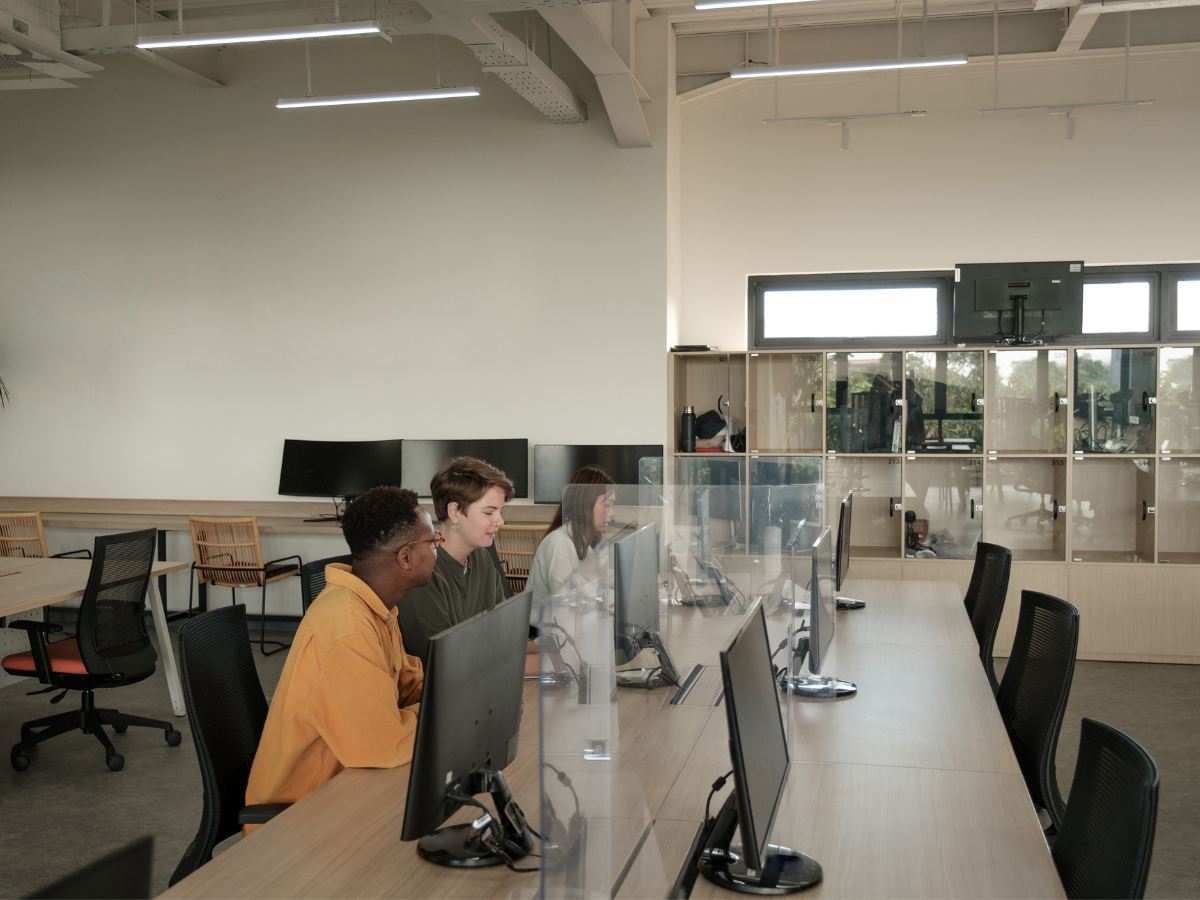


From lively corporate offices to calm, collaborative co-working spaces, each type of work environment offers something different. Exploring these five spaces can help you understand where your strengths shine and what kind of setting suits you best. Join us as we break them down and help you find the right path for your career growth.
1. Traditional Office Environment
This work environment, typically found within corporate or government organizations, is characterized by a centralized location where individuals gather to perform their daily job duties. It offers structured spaces like cubicles or individual desks arranged in open floor plans or divided by walls for privacy. Shared areas such as meeting rooms and break rooms encourage interaction among employees, while managers and supervisors have designated offices for administrative tasks and private discussions.
Working in a conventional office offers advantages such as face-to-face communication, facilitating instant feedback, problem-solving, and team cohesion. The physical presence also promotes accountability, as supervisors can closely monitor employee activity and productivity. However, it’s important to note potential drawbacks, including limited opportunities for individual expression, flexible working hours, and challenges related to commuting and work-life balance.
2. Remote Work
In today’s interconnected world, the concept of being tethered to a physical office space is gradually loosening its grip. More professionals are embracing remote work as a means to find balance in their lives and unlock new opportunities for personal growth. From digital nomads traveling the globe to stay-at-home parents, this flexible arrangement allows individuals to tailor their work environment to suit their unique needs.
Remote work offers numerous advantages beyond convenience. It enables professionals to tap into talent pools across borders, eliminating geographical barriers that may hinder career progression. With seamless communication facilitated by technological advancements, teams can collaborate effectively regardless of their physical location. Additionally, the rise of co-working spaces presents an intriguing dynamic within this trend, offering professionals the chance to interact with like-minded individuals while enjoying the freedom of working remotely.
By understanding different work environments, it becomes evident that remote work holds immense potential for personal and professional development. Breaking free from traditional office settings allows individuals to seize opportunities aligned with their passions and goals, challenging themselves beyond their comfort zones. Embracing this growing trend offers not only greater flexibility but also exciting possibilities for connecting with diverse communities globally, expanding horizons like never before.
3. Freelancing and Gig Economy
In recent years, freelancing and the gig economy have gained increasing popularity as individuals seek flexibility and independence in their work. In these work models, professionals choose to work on a project basis or provide services independently, rather than being tied to a single company.
Freelancing allows professionals to offer their expertise and skills to multiple clients without the constraints of being employed by one organization. They have the freedom to set their own hours, rates, and select projects aligned with their interests and strengths. This grants them greater control over their career path and the ability to explore different industries or niches.
Similarly, the gig economy refers to a labor market characterized by short-term contracts or freelance work instead of traditional full-time employment. It encompasses various platforms where individuals can find temporary gigs or jobs, such as ride-sharing apps, food delivery services, or online marketplaces for graphic design or writing.
Both freelancing and the gig economy offer opportunities for increased autonomy, flexibility, and variety in work assignments. However, they also present challenges, including income instability due to fluctuating projects and competition from other freelancers. Understanding these concepts is crucial for individuals considering these work environments, enabling informed decision-making about career paths that foster personal growth while meeting professional goals.
4. Co-working Spaces
In today’s fast-paced professional world, co-working spaces have gained significant popularity. These shared work environments offer professionals from various industries a unique opportunity to collaborate and connect with like-minded individuals. Unlike traditional offices, co-working spaces provide an open and flexible atmosphere that fosters creativity and innovation.
Designed to break down barriers between different industries, co-working spaces encourage cross-collaboration. Professionals can work side by side, sharing ideas, knowledge, and resources. This sense of community allows for networking opportunities not readily available in traditional office settings.
Moreover, co-working spaces often provide additional amenities such as conference rooms, event spaces, and recreational areas. By creating a dynamic environment where professionals can work independently or collaborate on projects, these shared workspaces foster productivity while promoting a healthy work-life balance.
5. Entrepreneurship and Startups
Entrepreneurs and startups offer a unique work environment characterized by innovation, risk-taking, and the potential for rapid growth. Driven by a passion to create something new and bring their ideas to life, these individuals thrive in an atmosphere of freedom and creativity. Unlike traditional corporate offices with bureaucratic processes that may hinder progress, entrepreneurs embrace a fearless mentality that encourages experimentation and values mistakes as valuable learning opportunities.
In this dynamic setting, innovation takes center stage as entrepreneurs constantly think outside the box to solve problems and disrupt industries. Their willingness to take risks creates an environment where failure is seen as a stepping stone toward success. Additionally, working in startups provides individuals with greater visibility into how their contributions impact overall company performance, offering exciting opportunities for rapid growth.
By understanding these five work environments, individuals can make informed career choices and embark on fulfilling professional journeys aligned with their aspirations and goals. With the right knowledge, you can optimize your career move and pave the way for personal and professional success.


