



When the world talks about artificial intelligence, it usually talks about the visible giants, the CEOs on stages, the product demos that go viral, and the debates about alignment and regulation. But beneath that noise is a quieter movement, one defined not by public launches or press conferences, but by lines of code and API calls that have already reshaped the digital economy.
OpenAI recently did something that felt almost old-fashioned for a company that defines the frontier of software. It mailed out physical awards, solid frosted-glass plaques engraved with the OpenAI logo and the words “Honored for passing 10 billion tokens.” No NFTs. No virtual badges. Just a tangible expression of gratitude, sent by post, to developers whose applications had processed billions or even trillions of tokens through the OpenAI API.
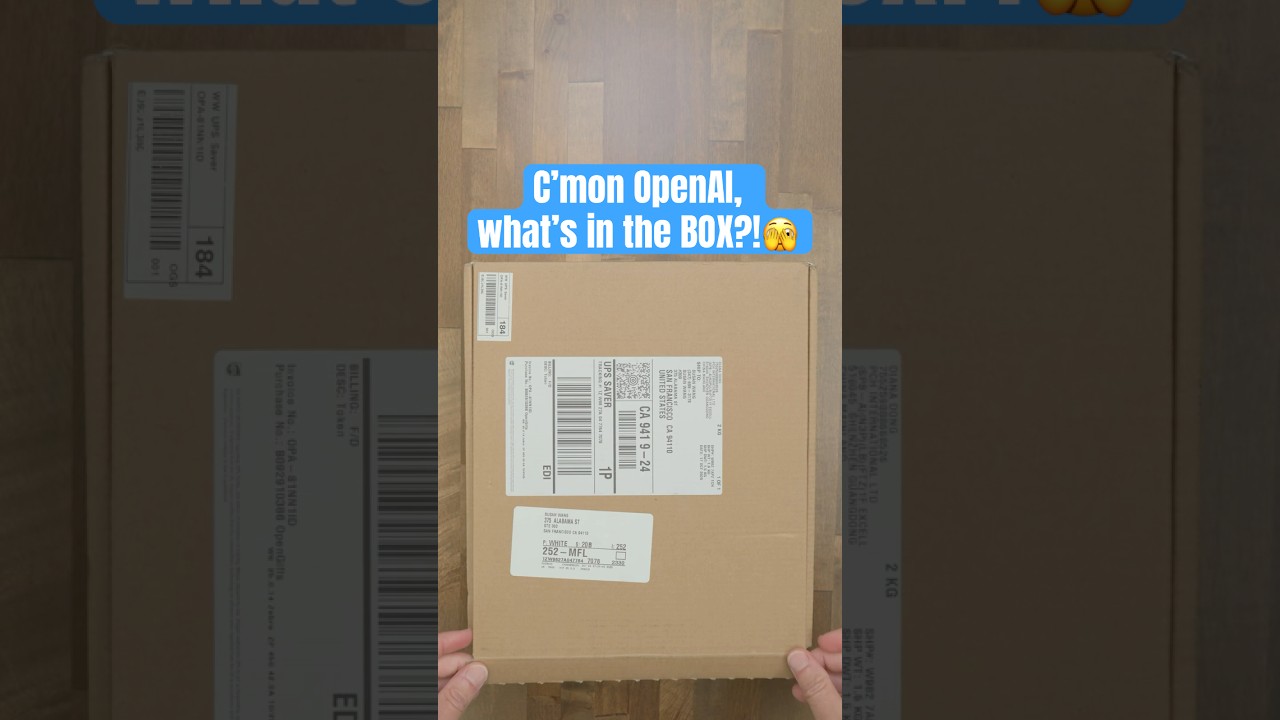
A rare pause for appreciation
In an industry that often runs on speed and abstraction, the gesture landed with surprising warmth. Developers from across the world unboxed their awards and held them up against skylines and office desks. Each plaque represented an unseen universe of work, the chatbots that handle customer care in fintech startups, the creative-writing engines used by filmmakers, and the enterprise copilots that quietly rewrite how work happens.
OpenAI called them Tokens of Appreciation. It is both a literal and poetic title, “tokens,” the smallest unit of language in the company’s models, and “appreciation,” something that can’t be measured by an API metric.
The milestone thresholds, 10 billion, 100 billion, 1 trillion, and even 10 trillion tokens, sound abstract to anyone outside the developer world. But each number tells a human story about experimentation, perseverance, and scaling ideas that once lived in notebooks into products that now serve millions.

The invisible infrastructure of intelligence
Every day, millions of developers tap into OpenAI’s API, sending and receiving text, images, and embeddings that fuel their own apps. Most users see ChatGPT as a single, self-contained tool. Yet the platform’s ecosystem, thousands of developers building on top of it, has become the real multiplier of intelligence.
These are the silent architects behind AI’s ubiquity, the ones who turn large language models into tutoring assistants, medical-note analyzers, recruitment tools, and story engines. They experiment at night, deploy in the morning, and monitor dashboards that glow with metrics of scale. They rarely get public attention, but their work defines how AI seeps into everyday life.
When OpenAI decided to acknowledge that community physically, it did more than send awards. It humanized the interface between the company and its users. In an era when every digital milestone feels transient, the idea of holding something that symbolizes invisible computation feels unexpectedly profound.

Designing gratitude in the age of algorithms
The design of the awards mirrors OpenAI’s minimalist aesthetic, frosted glass blocks with metallic medallions at their center, silver for billions, gold for trillions, blue for the rarefied one-trillion club. The plaques are engraved with each recipient’s name, turning anonymous usage statistics into personal stories of creation.
To the outside world, they might look like corporate memorabilia. To the recipients, they are physical markers of belonging to a moment in history, a reminder that even in the age of code, craftsmanship matters.
What makes this initiative remarkable is not the material value, but the symbolism. OpenAI did not issue a press release celebrating its own growth. It celebrated others. It turned what could have been a faceless metric, API throughput, into a narrative of shared achievement.

Building community, one token at a time
Behind every plaque is a conversation about community. OpenAI’s technology might be centralized, but its impact is deeply distributed. From indie developers hacking together prototypes in co-working spaces to enterprise teams embedding GPT-based logic into legacy systems, the range of contributors is staggering.
By recognizing them, OpenAI is signaling a shift. The era of AI is not just about algorithms, but about ecosystems. The developers processing trillions of tokens are not just customers, they are co-authors of the future that generative models are writing line by line.
In tech culture, gestures like this matter. They tell developers that their invisible labor, those late-night commits, model prompts, and bug fixes, count for something beyond invoices and API bills. It is recognition not for hype, but for consistency, scale, and trust.

The human story inside the data
One recipient joked online that he still did not know what a “token” technically was, even after passing ten billion of them. The humor reveals something essential. This field is evolving faster than anyone can fully grasp. Yet amid the blur of innovation, the Tokens of Appreciation campaign reintroduces a sense of humanity, reminding both the builders and the platform that creation, at its best, is a shared act.
It is easy to forget that every AI model is trained on language generated by humans, and every application powered by those models is, in turn, built by humans again. OpenAI’s gesture draws a full circle around that loop of creativity. It says yes, machines may generate the text, but it is people who give that text purpose.

A culture worth spreading
If this small act of recognition catches on, it could redefine how tech platforms celebrate scale. Imagine if cloud providers awarded the engineers who reached sustainability milestones, or if social networks honored creators for ethical innovation instead of engagement numbers.
OpenAI’s plaques may seem like minor trophies in a trillion-token universe, but they signal a major cultural pivot. They remind us that gratitude can be engineered just as elegantly as code, and that in the world of artificial intelligence, perhaps the most intelligent thing we can do is acknowledge the humans behind it.
Because at the end of the day, whether you are counting tokens or words, what keeps this revolution moving is not computation. It is contribution.
Work alongside the people building tomorrow’s intelligence. If you’re passionate about responsible AI research and large-scale experimentation, OpenAI’s internship program is where you belong.


