


When people talk about artificial intelligence, the spotlight usually falls on names like OpenAI, Google, or Nvidia. These are the brands that dominate headlines, conferences, and investor calls. But behind their breakthroughs lies a silent enabler, a Dutch company so powerful and irreplaceable that without it, AI as we know it would not exist.
That company is ASML.

The Most Important Company You’ve Never Heard Of
In a quiet corner of the Netherlands, in a town called Veldhoven, ASML operates out of glass buildings and sterile clean rooms. It does not make flashy apps or design smartphones. Instead, it builds the machines that make every advanced microchip on Earth possible.
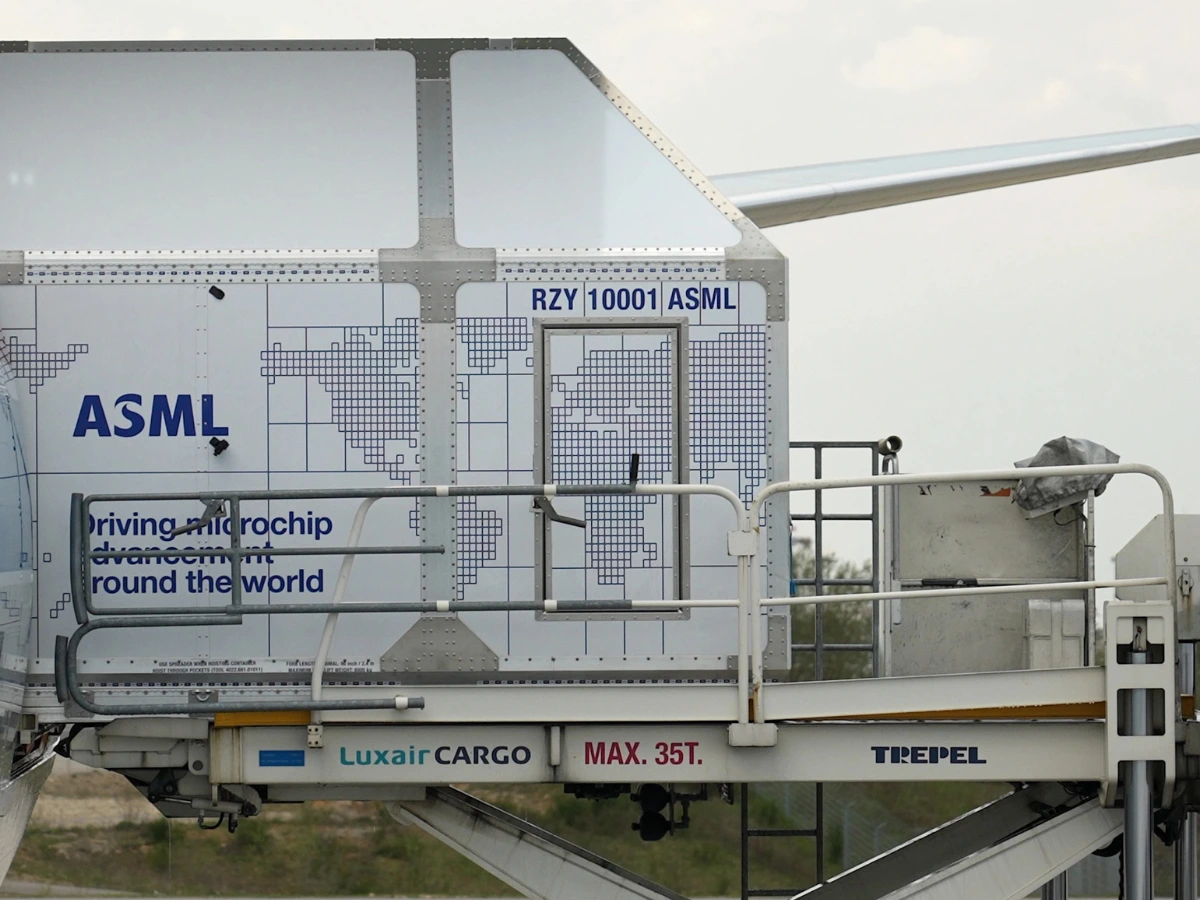
These machines, called EUV lithography systems, are among the most complex devices ever created by humans. Each costs over 150 million dollars, weighs around 180 tons, and needs three Boeing 747s to be transported. Inside them, light is manipulated with atomic precision to print billions of transistors on silicon wafers.
Without ASML, there would be no Nvidia GPUs, no Apple processors, no Intel chips, and no generative AI models like ChatGPT.

The Audacious Idea That Changed Everything
ASML’s story started in 1984 as a small spin-off from Philips. In the beginning, it struggled. The company was ignored by the media and doubted by investors. Bankruptcy was a constant threat. Yet, the engineers at ASML never gave up.
They believed one thing deeply: that chips would keep getting smaller, faster, and more complex. They saw a future where existing manufacturing methods would no longer be enough. While other companies focused on incremental upgrades, ASML decided to invent something entirely new.
The result was Extreme Ultraviolet Lithography, or EUV. It uses a special kind of light, hundreds of times thinner than a human hair, to draw incredibly small patterns on silicon. It took decades of research, collaboration, and engineering breakthroughs to make this technology real.
An EUV machine has more than 100,000 components from 5,000 suppliers. Its mirrors are so smooth that if one were the size of the United States, the tallest bump would be less than one millimeter high.
It is precision engineering at a level that borders on science fiction.

Why the Whole World Depends on ASML
Today, ASML stands alone. It is the only company in the world capable of producing EUV lithography machines. There are no alternatives, no backups, and no substitutes.
Every major chip manufacturer relies on ASML’s machines to create the next generation of processors. TSMC, Intel, Samsung, Nvidia, Apple, and AMD all depend on ASML to push the boundaries of what silicon can do.
The company builds only about 50 machines a year, and each one is pre-ordered long before it even leaves the factory. They do not need advertisements. Their reputation travels through the industry like gravity.

Engineering at the Edge of Imagination
The process of building one EUV machine is similar to constructing a rocket. Each system must align light waves, mirrors, and lenses with impossible accuracy. The equipment inside can etch patterns smaller than a virus, forming the foundation of the most advanced chips in the world.
To imagine the scale of its precision, think of a beam of light that travels through layers of lenses, bouncing off mirrors that must remain perfectly stable even when heated to extreme temperatures. Any vibration, any imperfection, would destroy the chip.
This is the hidden craft that powers the digital age.

A Quiet Giant Worth Hundreds of Billions
ASML is now valued at more than 400 billion dollars. Yet it sells only about 50 EUV machines per year. There is no mass advertising, no social media campaigns, and no hype.
Their success is built entirely on mastery, patience, and precision. They do not chase attention, but every major innovation in computing quietly passes through their machines.
In an era of constant buzz and fast launches, ASML represents the opposite. It proves that real breakthroughs often come from long-term focus, deep technical understanding, and a willingness to solve problems that others find impossible.

The Power of Obsession
ASML’s journey is a story of persistence. It was a company that nearly disappeared, but instead, it became indispensable to modern technology. While others pivoted toward quick wins, ASML invested decades into an idea that most experts dismissed as impossible.
That bet paid off. Today, every major chip in your phone, your laptop, and your AI models owes its existence to their machines.
ASML does not seek the spotlight, yet it holds the key to the future of computing. Its engineers work in silence, shaping the tools that shape our world.
The next time you see a breathtaking AI breakthrough or a lightning-fast new processor, remember that somewhere in the Netherlands, a beam of ultraviolet light made it possible.
If you’re fascinated by the kind of technology that powers the world’s most advanced chips, explore ASML’s internship programs and see what it takes to work at the cutting edge of innovation.


